Market News
Stay updated with the latest market trends, earnings, and economic indicators.
ADB trims India's growth projection to 6.6% reflecting elevated energy prices
Asian Development Bank on Thursday lowered India's GDP growth projection to 6.6 per cent as against 6.9 per cent estimated earlier for the current fiscal on concerns of higher energy prices fuelled by the Middle East crisis. Despite the growth moderation, India still continues to be the fastest-growing major economy in the world, ADB said. India's GDP growth forecasts are revised down to 6.6 per cent for FY2026 (ending 31 March 2027) and maintained at 7.3 per cent for FY2027, Asian Development Outlook (ADO) July 2026 said. Growth will be supported by policy interventions to attract more foreign capital, as well as fuel tax cuts, targeted credit support, strong services exports, and public capital expenditure. The FY2027 growth forecast remains unchanged from April, underpinned by improved global conditions and export competitiveness gained through trade agreements with various partners. However, risks tilt to the downside driven by heightened geopolitical tensions, or weather-induced

Stocks in news: Hero MotoCorp, Canara Bank, Bharti Airtel, Indian Hotels, SBI
Indian markets opened positively, with analysts suggesting a stock-specific strategy amidst consolidation. Hero MotoCorp sees a revival in commuter bike demand, planning capacity expansion. Canara Bank and Indian Bank reported strong credit growth. Bharti Airtel's NBFC arm has begun operations, while Indian Hotels plans significant capital expenditure. SBI launched AI-powered innovations, and BPCL is acquiring a stake in a Brazilian oil venture.

Indian banks more exposed to West Asia crisis among APAC region: Moody's
Indian banks face significant exposure due to energy import reliance. Higher fuel costs will strain consumers and businesses, increasing credit stress. Non-bank lenders with unsecured retail loans are particularly vulnerable. Despite these pressures, Indian banks possess strong capital buffers.
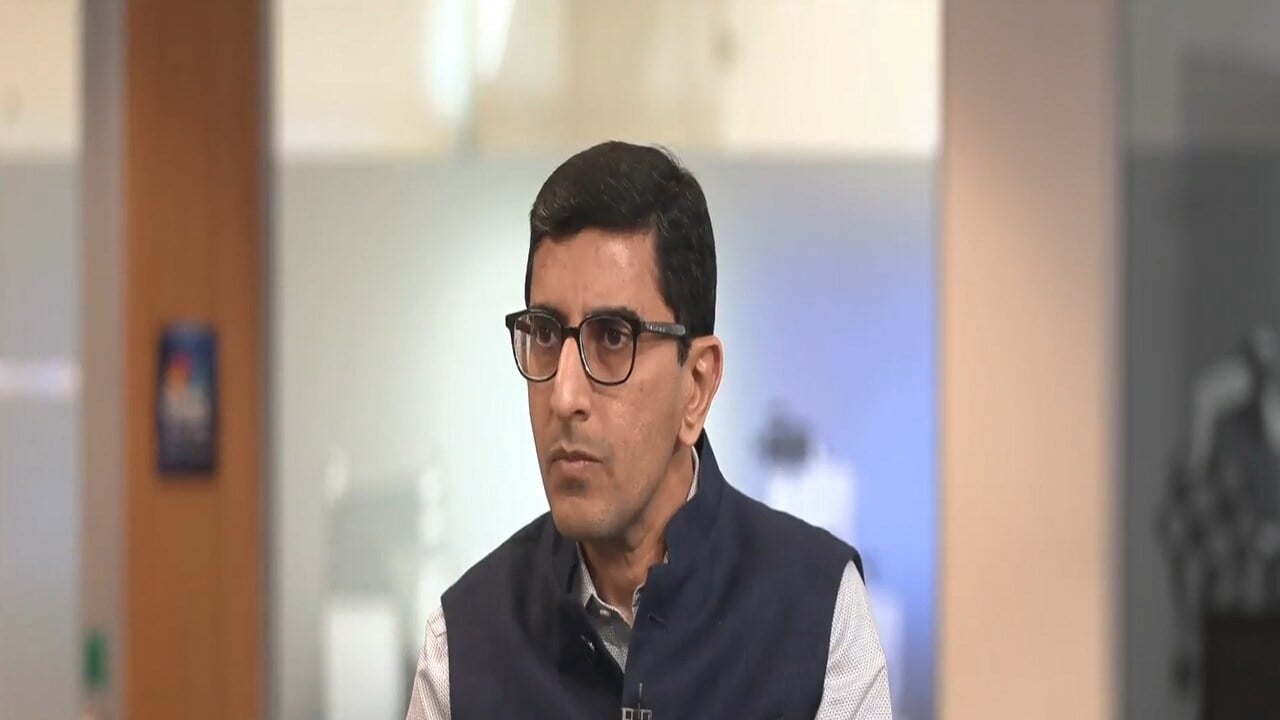
Markets in ‘fear phase’, deploy money in autos, banks, capital goods: AlfAccurate’s Rajesh Kothari
The sharp correction in Indian equities triggered by fears of a prolonged war in West Asia should be viewed as a buying opportunity, according to Rajesh Kothari, Managing Director at AlfAccurate Advisors.Benchmark indices declined nearly 3% this week — their steepest weekly fall in over a year — as rising crude oil prices and geopolitical tensions rattled investor sentiment. Financial stocks led the decline, with the Nifty Bank logging its biggest weekly drop in 14 months.However, Kothari believes the selloff reflects sentiment rather than a deterioration in underlying economic fundamentals.“We are currently in a fearful phase of the market. When others are fearful, that’s usually the time to be greedy,” Kothari told CNBC-TV18, advising investors to deploy money gradually over the next 30–60 days rather than attempting to time the market.He emphasised that the outcome of the West Asia conflict is less important for markets than its duration. While companies with exposure to the Middle East could face short-term uncertainty, the broader domestic growth story remains intact.Against this backdrop, Kothari highlighted four sectors that investors should focus on.Autos remain a key bet, supported by strong demand trends and low inventory levels across the industry. February sales data was robust, and leading automakers have reported healthy growth, signalling sustained momentum.Banking and financials are another preferred sector. Credit growth has improved to around 13% from about 8.5% earlier, while asset quality remains strong. According to Kothari, the sector could become a “strong buy on declines” if crude-driven inflation concerns ease.He also sees opportunities in capital goods, particularly companies reporting strong order inflows as India’s investment cycle picks up.Lastly, hospitals stand out as a defensive play. The sector remains largely insulated from geopolitical risks and technological disruptions such as artificial intelligence.“These are strong India stori

Watch | Sanjay Parekh on where he sees value in banks, IT, cement and telecom stocks
Sohum Asset Managers’ Founder & CIO, Sanjay Parekh, says markets look sluggish despite improving macro conditions, with Q3 Nifty earnings near 8–9%. He sees recovery in CVs (Ashok Leyland), credit growth at ICICI Bank and gradual picka a up in cement and steel. Portfolio stays domestic-focused: overweight telecom, NBFCs, industrials, cement, utilities, ports and logistics; underweight oil & gas and banks, zero FMCG. Watching IT names like Infosys and TCS, mid-cap tech (Persistent, Coforge, Mastek), defence HAL, quick commerce Zomato and Swiggy, and capital goods L&T, JSW Energy.

Asian shares are mixed, US futures up as AI fears drag Wall Street lower
Shares were mixed Friday in Asia as worries over risks linked to massive investments in artificial intelligence and a potential US-Iran conflict weighed on major benchmarks. US futures edged higher, while oil prices resumed their ascent. Crude prices have been climbing as both the United States and Iran signal they are prepared for war if talks on Tehran's nuclear programme fizzle out. Tokyo's Nikkei 225 fell 1.2 per cent to 56,797.22 as shares in major banks and other financial institutions skidded on worries over the potential impact of weakening private credit companies that have lent to companies exposed to the risk that AI will steal away their businesses. That includes market heavyweights like Mitsubishi UFJ Financial Group, which has a partnership with Blue Owl Capital, one such private-credit company. MUFJ's shares dropped 2.6 per cent in Tokyo after Blue Owl lost 5.9 per cent on Thursday. Toyota Motor Corp. fell 3.9 per cent and Sony was down 3.3 per cent. In Hong Kong, t