Market News
Stay updated with the latest market trends, earnings, and economic indicators.
INR settles higher, supported by good recovery in local equities
The Indian rupee appreciated by 7 paise to settle at 95.41 (provisional) against the US dollar on Thursday even as crude oil prices firmed up and the greenback strengthened in the global markets. A recovery in the stock markets and dollar selling by state-run lenders supported the local currency amid rising volatility triggered by the fresh escalation in the West Asia crisis. At the interbank foreign exchange market, the rupee opened lower by 4 paise at 95.52 against the US dollar and later traded in the range of 95.58 to 95.28 during the day. It settled at 95.41 (provisional), up 7 paise from the previous close. The rupee had declined by 52 paise to settle at 95.48 against the US dollar on Wednesday. Indian shares ended modestly higher on Thursday, after having fallen heavily in the previous session amid escalating hostilities in the Middle East. At the close of the market, the NSE Nifty 50 advanced 80.75 points (0.34%) to settle at 23,962.80, while the BSE Sensex gained 238.22 ...
INR settles higher as global crude oil prices continue to slide
The Indian rupee appreciated 16 paise to settle at 94.39 (provisional) against the US dollar on Thursday as global crude oil prices continued to slide. Positive sentiments in the domestic equity markets and a marginally weaker greenback further supported the local unit while FII outflows prevented sharper gains. At the interbank foreign exchange, the rupee opened at 94.30 against the dollar and traded in the range of 94.13-94.56. It settled at 94.39 (provisional), up 16 paise from the previous close. Indian shares gave up some early gains to end modestly higher on Thursday. Underlying sentiment remained underpinned somewhat as oil prices extended declines to levels seen before the Middle East conflict on signs of improving flows through the Strait of Hormuz, a key maritime route that handles around one-fifth of global oil supplies.
INR settles lower amid pessimistic global sentiments
The Indian rupee declined 11 paise to close at 94.74 (provisional) against the US dollar on Tuesday weighed down by a firm greenback and weak domestic markets. However, a decline in global crude oil prices cushioned against a sharper decline in the local unit. At the interbank foreign exchange, the rupee opened at 94.73 against the US dollar and traded in a range of 94.63-94.92 before settling at 94.74 (provisional), down 11 paise from its previous close. Indian stock indices Sensex and the Nifty50 ended notably lower on Tuesday, weighed down by weakness in global markets, FII selling and weak Indian PMI data. Global tech stocks fell amid concerns that AI-driven valuations have become overstretched, triggering heavy selling in the Indian tech space.

Rupee appreciates for 3rd straight day on easing West Asia tensions
The rupee appreciated for the third straight session on Tuesday to close 5 paise higher at 94.53 (provisional) against the US dollar, supported by easing West Asia tensions and extended fall in crude oil prices. Forex traders said that with the reported de-escalation of the US-Iran conflict and diplomatic agreements regarding the Strait of Hormuz, the immediate threat to global energy supplies has significantly reduced. Moreover, softening of the US dollar and a decline in US treasury yields also supported the USD/INR pair, they said. At the interbank foreign exchange, the rupee opened at 94.69 against the US dollar and traded in the range of 94.48-94.71. Eventually, it settled at 94.53 (provisional), up 5 paise from its previous close. "We expect the rupee to trade with a positive bias as global markets cheer the US-Iran deal, which has boosted global risk sentiments. Declining US dollar and falling crude oil prices may further support the rupee. "Easing inflation concerns and ..

Investors Fled From Bearish Oil Fund at a Record Pace Last Week
An exchange-traded product that profits when oil prices fall had its biggest weekly outflow on record as several buffers that had helped keep rallies in check begin to fade.

West Asia crisis, oil prices key driver for gold this week: Analysts
Gold prices will remain sensitive to developments in West Asia, movement in crude oil prices, and a series of key economic data releases in the coming week, analysts said. Investors will monitor trade and inflation data from China and the US, mid-month Washington's consumer sentiment figures and India's Consumer Price Index (CPI) readings. The European Central Bank's monetary policy decision will also be in focus as market participants assess their impact on bullion and other commodities, they added. "Momentum for precious metals such as gold and silver still looks corrective," Pranav Mer, Vice President, EBG -- Commodity & Currency Research, JM Financial Services Ltd, said. Domestic commodity markets ended the week lower, with MCX gold futures for August delivery falling Rs 5,317, or 3.3 per cent, to Rs 1.55 lakh per 10 grams. Silver for July delivery fell Rs 18,461, or 7 per cent, to Rs 2.48 lakh per kilogram on the Multi Commodity Exchange (MCX). "Gold witnessed a weak ...

Exchange of old gold has risen almost 60% year-on-year, say jewellery retailers
Gold prices are soaring in India, prompting a surge in old gold exchanges. Consumers are trading in existing jewellery to buy new pieces. This trend is reshaping the jewellery market. Leading retailers report significant increases in exchange-led sales. This shift helps reduce the country's reliance on gold imports. Household gold is now entering the market.
INR settles lower as global crude oil prices stay elevated amid Middle East turmoil
The Indian rupee depreciated 15 paise to close at 95.34 (provisional) against the US dollar on Tuesday, as global crude oil prices jumped and the American currency remained firm amid massive safe-haven inflows. Significant foreign fund outflows also weighed on the investor sentiments. At the interbank foreign exchange market, the rupee opened at 95.16 against the US dollar, then touched an intraday high of 95.03 and a low of 95.37. Indian shares closed higher on Tuesday, staging a rebound after four days of losses as investors assessed mixed signals over the status of U.S.-Iran peace talks and awaited upcoming RBI rate decision. The Nifty 50 gained 100.95 points (0.43%) to close at 23,483.55, while the Sensex rose 382.50 points (0.52%) to settle at 74,649.84.
INR traded with a depreciating bias amidst widening of merchandise trade deficit and rise in oil prices: RBI annual report 2025-26
The Indian Rupee (INR) traded with a depreciating bias during the year amidst trade related uncertainties, geopolitical tensions, and foreign portfolio investment (FPI) outflows in the equity segment, RBI noted in its annual report 2025-26. The Indian Rupee (INR) experienced bouts of volatility amidst rise in geopolitical tensions and tariff related uncertainties. The widening of merchandise trade deficit and rise in oil prices during the last quarter added to the headwinds. The Reserve Bank intervened in the forex market through operations in the onshore/ offshore OTC and exchange traded currency derivatives segments to maintain orderly market conditions and contain excessive volatility in the exchange rate, the report noted.

India’s Gold Import Problem May Already Have A Solution At Home
India's massive gold imports are prompting a shift in consumer behaviour. Families are now exchanging old jewellery, unlocking dormant value. Organised brands are expanding gold exchange programs, making purchases more transparent. This trend helps reduce reliance on new gold imports. Indians are not giving up gold but are using their existing holdings more wisely.
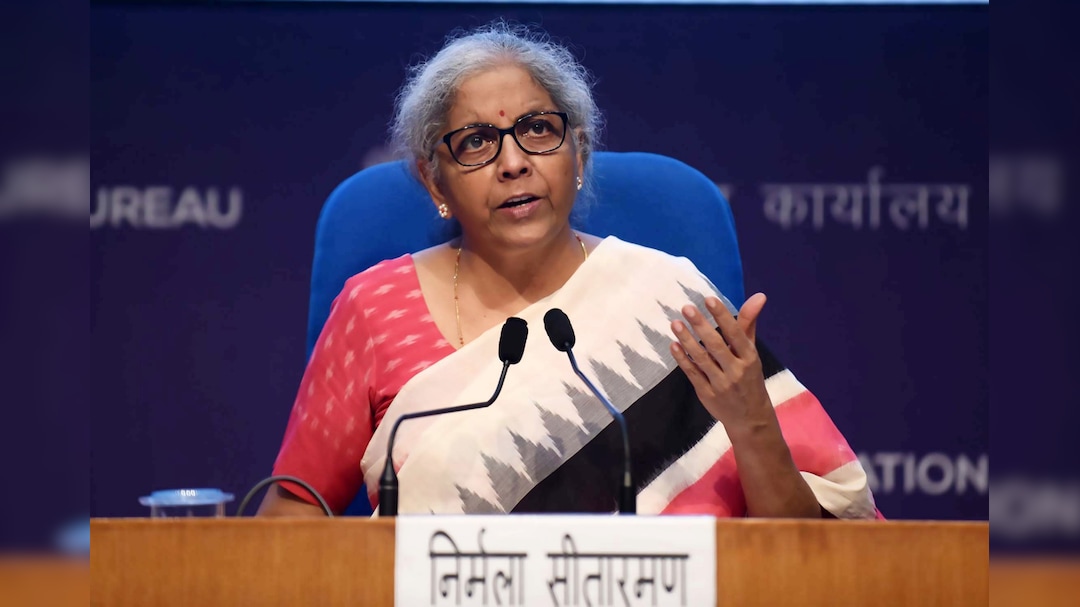
'India Cannot Afford Fear Mongering': FM Sitharaman On Fuel Prices, MSME Credit Push, And US-Iran Conflict
Sitharaman also linked Prime Minister Narendra Modi's recent appeal for austerity to rising global crude oil, fertiliser and gold prices, saying the pressure on imports had implications for both inflation and foreign exchange reserves.

Modi wants Indians to press pause on gold. But the $5.2 trillion obsession runs deep
India’s attempt to protect the rupee is now colliding with one of the country’s strongest cultural habits — buying gold. After Prime Minister Narendra Modi urged citizens to avoid gold purchases for a year, the government raised gold import duty from 6% to 15% to reduce pressure on foreign exchange reserves and the current account deficit.