Market News
Stay updated with the latest market trends, earnings, and economic indicators.
INR extends downside as dollar firms and oil renews surge
The Indian rupee slipped back against the dollar in opening trades on Thursday as dollar index renewed gains and crude oil prices took flight. The dollar index traded around 100 on Thursday, lingering near its highest levels in two months amid fresh US attacks over Iran and as US consumer inflation accelerated in May to its fastest pace in more than three years due to soaring energy costs. INR opened at Rs 95.55 per dollar and slipped further to a low of 95.64 so far during the day. Yesterday, rupee was largely flat and settled almost unchanged at Rs 95.25 per dollar. Rupee pared its initial losses as crude oil prices and the US dollar index retreated from their elevated levels. Local equities are likely to open on a cautious note on Thursday as concerns mounted about a re-escalation of the Middle East conflict and a stronger U.S. inflation print reinforced expectations that borrowing costs would remain higher for longer. On Wednesday, Indian shares gave up early gains to end little .
Power finance cos turn to global markets for cheaper funds
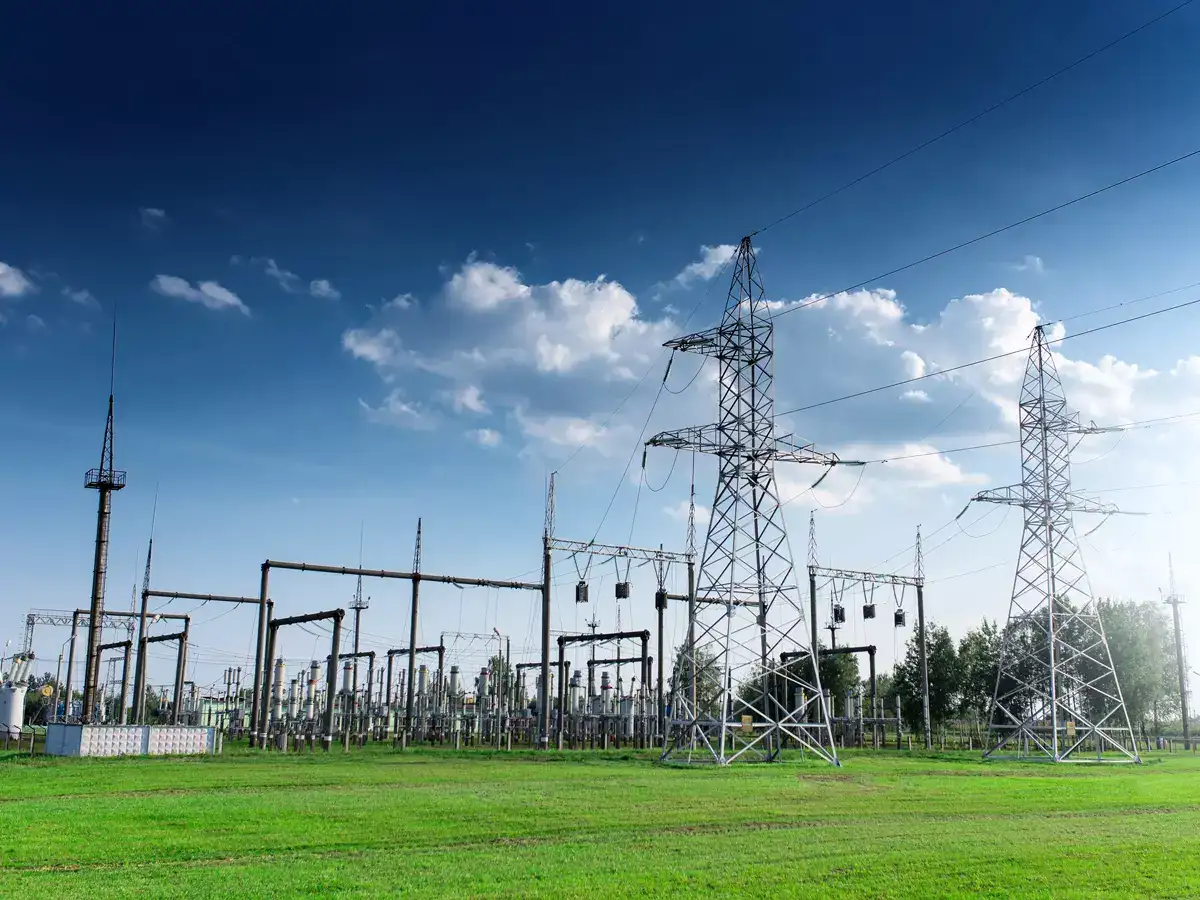
Indian power and renewable energy firms are looking abroad for loans. The Reserve Bank of India's new dollar-rupee swap facility has made foreign currency borrowing cheaper. Companies like REC and PFC are planning to raise significant funds through external commercial borrowings. This move is expected to lower borrowing costs for these public sector undertakings.
INR pares initial losses and settles largely unchanged
The Indian rupee was largely flat and settled almost unchanged at Rs 95.43 per dollar, down just 2 paise on Wednesday, amid likely intervention from the Reserve Bank of India (RBI) to curb excessive volatility and prevent a further slide in the domestic unit. Rupee pared its initial losses as crude oil prices and the US dollar index retreated from their elevated levels. Indian shares gave up early gains to end little changed on Wednesday as investors weighed rising U.S.-Iran tensions and awaited key U.S. inflation data later in the day for fresh insights into market expectations for future interest rates in the face of rising energy-driven inflation risks. The BSE Sensex ended the day at 73,983.18, up by 64.42 points (0.09%), while the NSE Nifty 50 settled at 23,214.95, slipping by 27.15 points (-0.12%).

7 most valued firms' mcap eroded ₹1.25 trn last week, RIL took biggest hit
The combined market valuation of seven of the top-10 most-valued firms eroded by Rs 1.25 lakh crore last week, with Reliance Industries taking the biggest hit, in-line with a bearish trend in equities. Last week, the BSE benchmark Sensex declined 532.4 points, or 0.71 per cent, and the NSE Nifty dipped 181.05 points, or 0.76 per cent. "Persistent FII selling remained the key drag on market sentiment despite supportive developments such as cooling crude oil prices and a recovery in the rupee against the US dollar. Concerns regarding the pace of monsoon advancement also weighed on investor confidence," Santosh Meena, Head of Research at Swastika Investmart Ltd, said. From the top-10 pack, Reliance Industries, Bharti Airtel, Tata Consultancy Services (TCS), Bajaj Finance, Larsen & Toubro, Life Insurance Corporation of India (LIC) and Hindustan Unilever faced erosion from their valuation, while HDFC Bank, ICICI Bank, and State Bank of India were the gainers. The market valuation of ...
Gold slumps most in two months as jobs fuel Fed rate-hike bets
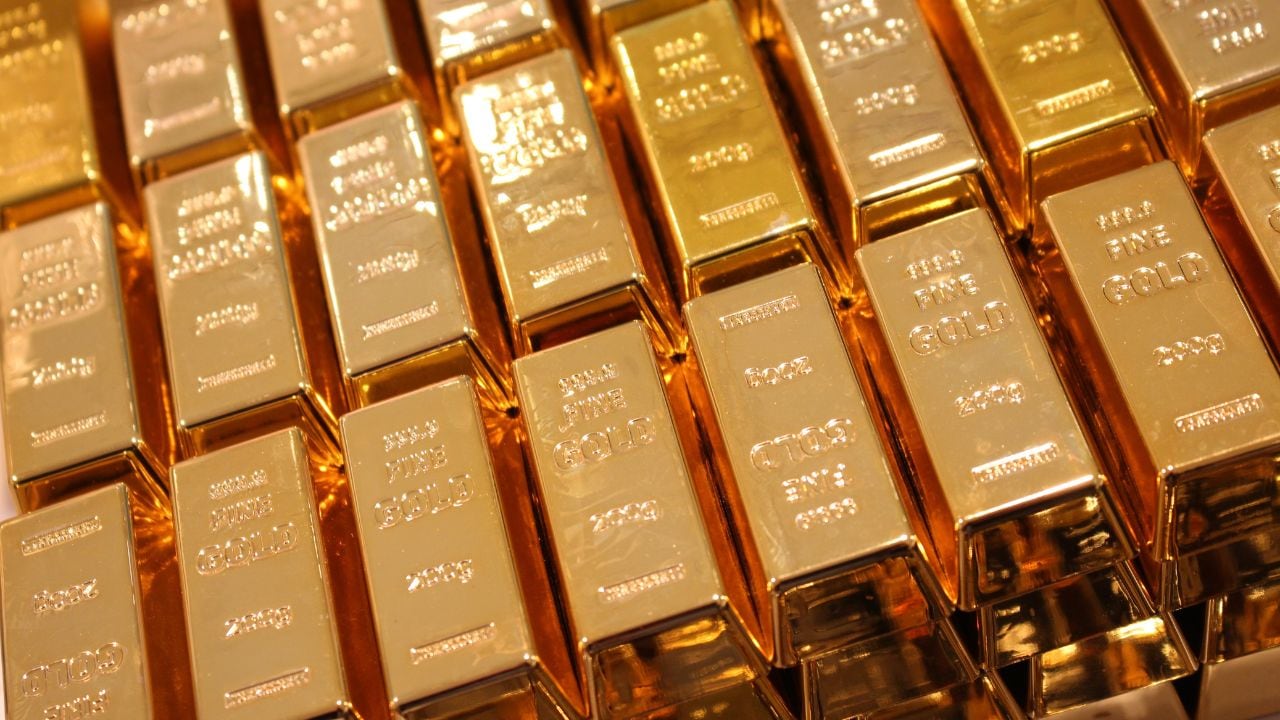
Bullion declined as much as 3.4% as bond yields and the dollar climbed after the latest US data showed job growth topped all forecasts in May. The strength in the labour market keeps the door open for Fed officials to hike rates as Middle East tensions fuel higher energy prices.
INR appreciates under Rs 95 per dollar after RBI announces measures to support foreign capital inflows and strengthen forex liquidity
The Indian rupee appreciated 81 paise to close at 94.93 (provisional) against the US dollar on Friday after the Reserve Bank announced measures to support foreign capital inflows and strengthen forex liquidity. The announcements in the RBI policy boosted investor sentiments after the apex bank asserted that the country's forex reserves provide a sufficient buffer against external shocks. The Reserve Bank on Friday expectedly kept interest rates unchanged for the second time in a row as it weighed the impact of rising energy prices and supply disruptions caused by the West Asia crisis. The RBI kept its repo rate Steady at 5.25% amid uncertainty owing to US-Iran War. However, it expanded the Fully Accessible Route, or FAR, to include all new 15-year, 30-year and 40-year government security issuances. Due to this, the foreign investors will get wider access to longer-tenor Indian government bonds. This also opens up more room to invest in Indias bond market. The central bank has also ...
INR regains momentum with all eyes on RBI monetary policy
The Indian rupee is regaining some momentum in opening trades on Friday as the global crude oil prices eased and market participants keenly awaited the RBI's MPC decision today. Heightened geopolitical tensions between the US and Iran drove energy volatility and aggressive safe-haven buying capped sharp gains in the local unit. INR opened at Rs 95.72 per dollar and hit a high of 95.63 so far during the day. Yesterday, rupee depreciated 7 paise to close at 95.83 against the US dollar. Local markets opened in the green with investors closely watching the Reserve Bank of India (RBI) monetary policy announcement scheduled for today. The Indian benchmark indices are trading higher today, with the NIFTY 50 hovering around 23,442.30 (+0.11%) and the S&P BSE SENSEX trading at 74,556.68 (+0.26%).
INR settles lower as prolonged West Asia crisis poses a major risk for India; RBI eyed
The Indian rupee depreciated 7 paise to close at 95.83 (provisional) against the US dollar on Thursday, as heightened geopolitical tensions between the US and Iran drove energy volatility and aggressive safe-haven buying. The prolonged West Asia crisis poses a major risk for India, which relies heavily on energy imports. Market participants are now turning their attention to the Reserve Bank of India's MPC rate decision on June 5, as inflation, growth and the rupee are under focus. The six-member MPC, headed by RBI Governor Sanjay Malhotra, will announce its decision on June 5. Indian equity benchmarks ended flat but resilient today, recovering from early intraday losses. The NSE Nifty 50 closed marginally higher by 10.95 points (0.05%) at 23,416.55, while the BSE Sensex inched up 13.84 points (0.02%) to finish at 74,360.01. The primary catalysts for the market recovery were breaking news of potential tax concessions for foreign institutional investors (FIIs) and tentative signs of ..
Deep under China's coal basins, PetroChina is unlocking gas from rocks
China is unlocking a new energy frontier with coal rock gas extracted from deep within its coal basins. This ambitious multi-billion-dollar initiative is set to bolster domestic natural gas production while easing its dependence on foreign imports. With PetroChina predicting vast output by 2035, this strategy could position China as a fortress against global energy volatility.

Expert View | Why are gold, silver rates likely to remain volatile in 2026? Kaynat Chainwala of Kotak Securities answers
India’s external balance remains far more sensitive to crude oil prices than to bullion imports. So, gold and silver can amplify the pressure, but crude is still the main swing factor as energy imports remain the dominant driver of dollar outflows, says Kaynat Chainwala of Kotak Securities.

Rising bond yields put equities at risk, Adrian Mowat says hold dollar cash
Adrian Mowat, Investor at Hong Kong SAR warned that tighter monetary policy and higher discount rates could pressure earnings and valuations, while emerging markets like India face added stress from currency weakness, higher energy costs and pressure on consumers.
INR collapses to new historic lows driven by global conflicts and energy spikes
The Indian rupee slipped to a record low of 96.60 against the US dollar before settling at 96.52 (provisional) on Tuesday, weighed down by soaring crude oil prices, persistent foreign capital outflows, and a resilient dollar buoyed by global risk-aversion. The rupee is Asia's worst-performing currency in 2026, having tumbled to a historic intraday low of 96.60 against the US dollar. The currency has depreciated 1.5 per cent this month and more than 7 per cent so far this year. Rupee remains vulnerable to rising crude oil prices and the closure of the Strait of Hormuz. Meanwhile, the Indian equity benchmarks surrendered their early morning gains in a highly volatile trading session to settle marginally lower due to late profit-booking. The BSE Sensex declined 114.19 points (0.15%) to close at 75,200.85, while the NSE Nifty 50 slipped 31.95 points (0.14%) to finish at 23,618.00.