Market News
Stay updated with the latest market trends, earnings, and economic indicators.

CLSA says Nifty has given a new signal on the charts; check potential returns and top midcap 'buys'
Laurence Balanco of CLSA has shared five midcap ideas: BSE, MCX, Apollo Tubes, Dixon Technologies and Aurobindo Pharma.

Execution, order inflows to drive L&T growth; BEL rides defence push: Siddhartha Khemka
India's capital goods sector is experiencing robust growth, fueled by strong order backlogs and increasing project execution across infrastructure, power, and industrial segments. Government focus on development and manufacturing, alongside new-age tech investments, is driving demand. Companies are poised for steady revenue expansion and stable profitability, with key players like L&T and BEL showing strong prospects.
INR settles at new lifetime low as soaring oil prices dampen sentiments
The Indian rupee declined 14 paise to settle at an all-time low of 92.42 (provisional) against the US dollar on Tuesday, pressured by rising crude oil prices and sustained outflow of foreign funds amid the West Asia crisis. A positive trend in domestic equity markets also helped the domestic currency at the lower level, even as investors remained watchful of the US Federal Reserve's interest rate decision. Indian stock markets closed significantly higher for the second consecutive session, driven by gains in auto and metal sectors despite volatility. The Sensex jumped 568 points (0.75%) to close at 76,071, while the Nifty 50 added over 172 points (0.74%) to end at 23,581, rebounding after recent sharp losses. At the interbank foreign exchange, the local unit opened at 92.35 and hit the lowest intra-day level of 92.47 against the greenback. The unit finally ended at a new lifetime low of 92.42.
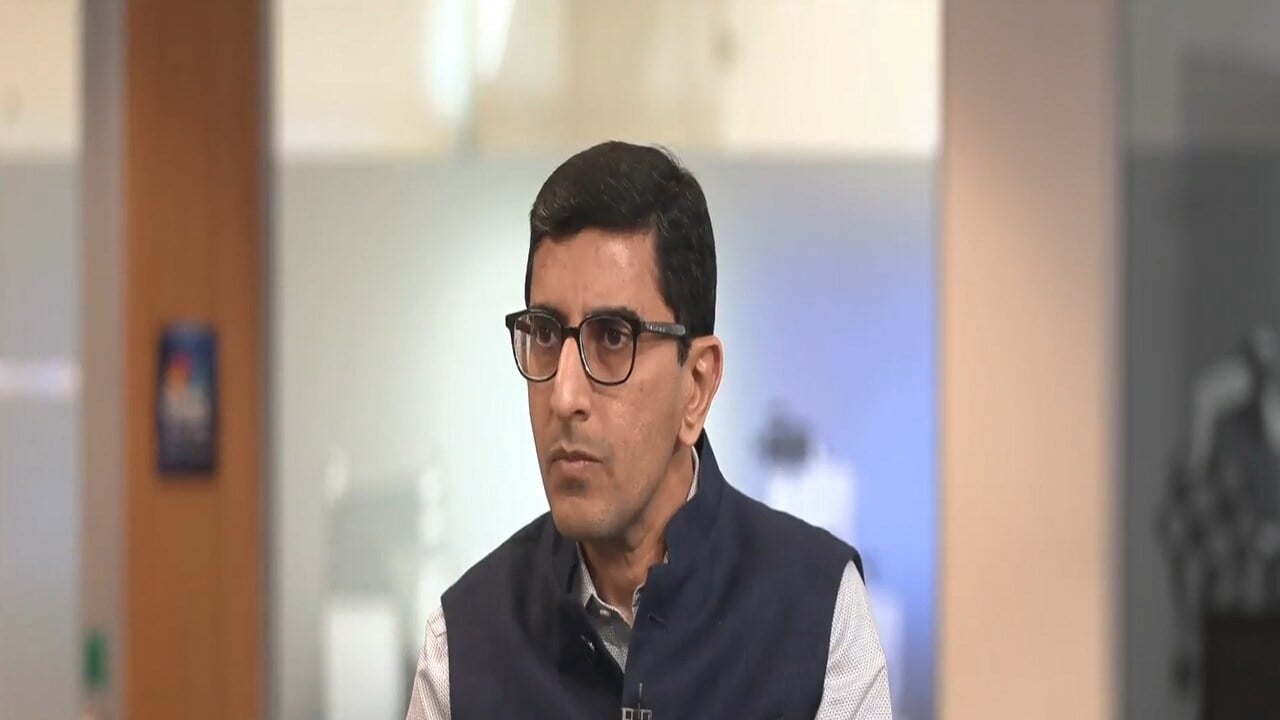
Markets in ‘fear phase’, deploy money in autos, banks, capital goods: AlfAccurate’s Rajesh Kothari
The sharp correction in Indian equities triggered by fears of a prolonged war in West Asia should be viewed as a buying opportunity, according to Rajesh Kothari, Managing Director at AlfAccurate Advisors.Benchmark indices declined nearly 3% this week — their steepest weekly fall in over a year — as rising crude oil prices and geopolitical tensions rattled investor sentiment. Financial stocks led the decline, with the Nifty Bank logging its biggest weekly drop in 14 months.However, Kothari believes the selloff reflects sentiment rather than a deterioration in underlying economic fundamentals.“We are currently in a fearful phase of the market. When others are fearful, that’s usually the time to be greedy,” Kothari told CNBC-TV18, advising investors to deploy money gradually over the next 30–60 days rather than attempting to time the market.He emphasised that the outcome of the West Asia conflict is less important for markets than its duration. While companies with exposure to the Middle East could face short-term uncertainty, the broader domestic growth story remains intact.Against this backdrop, Kothari highlighted four sectors that investors should focus on.Autos remain a key bet, supported by strong demand trends and low inventory levels across the industry. February sales data was robust, and leading automakers have reported healthy growth, signalling sustained momentum.Banking and financials are another preferred sector. Credit growth has improved to around 13% from about 8.5% earlier, while asset quality remains strong. According to Kothari, the sector could become a “strong buy on declines” if crude-driven inflation concerns ease.He also sees opportunities in capital goods, particularly companies reporting strong order inflows as India’s investment cycle picks up.Lastly, hospitals stand out as a defensive play. The sector remains largely insulated from geopolitical risks and technological disruptions such as artificial intelligence.“These are strong India stori
Tata Electronics to make Qualcomm Automotive Modules in Assam under new pact with US chip giant
Under the arrangement, Tata Electronics will become part of Qualcomm Technologies’ global network of module manufacturing partners, a move aimed at catering to rising worldwide demand for modular automotive platforms.