Market News
Stay updated with the latest market trends, earnings, and economic indicators.

US stocks fell, GIFT Nifty down 300 points and oil nears $100. How will stock market react on Monday?
Indian equities are set for a weak start on Monday after global markets ended the week sharply lower. Rising crude oil prices following escalating Middle East tensions and a selloff in US stocks have dampened sentiment. Analysts warn markets may remain volatile as investors track oil prices, foreign flows and geopolitical developments.
Ziller Global Fund Active ETF (ZILR) - Investing.com India
Ziller Global Fund Active ETF (ZILR)Investing.com India

A warning from Qatar's energy minister sends global markets into a tizzy in 30 minutes
The Nifty 50, which was already down close to 150 points for most of Friday's trading session, ended 315 points lower at 25,450, taking the drop during the four-day week to over 700 points and wiping out investor wealth worth over ₹15 lakh crore.
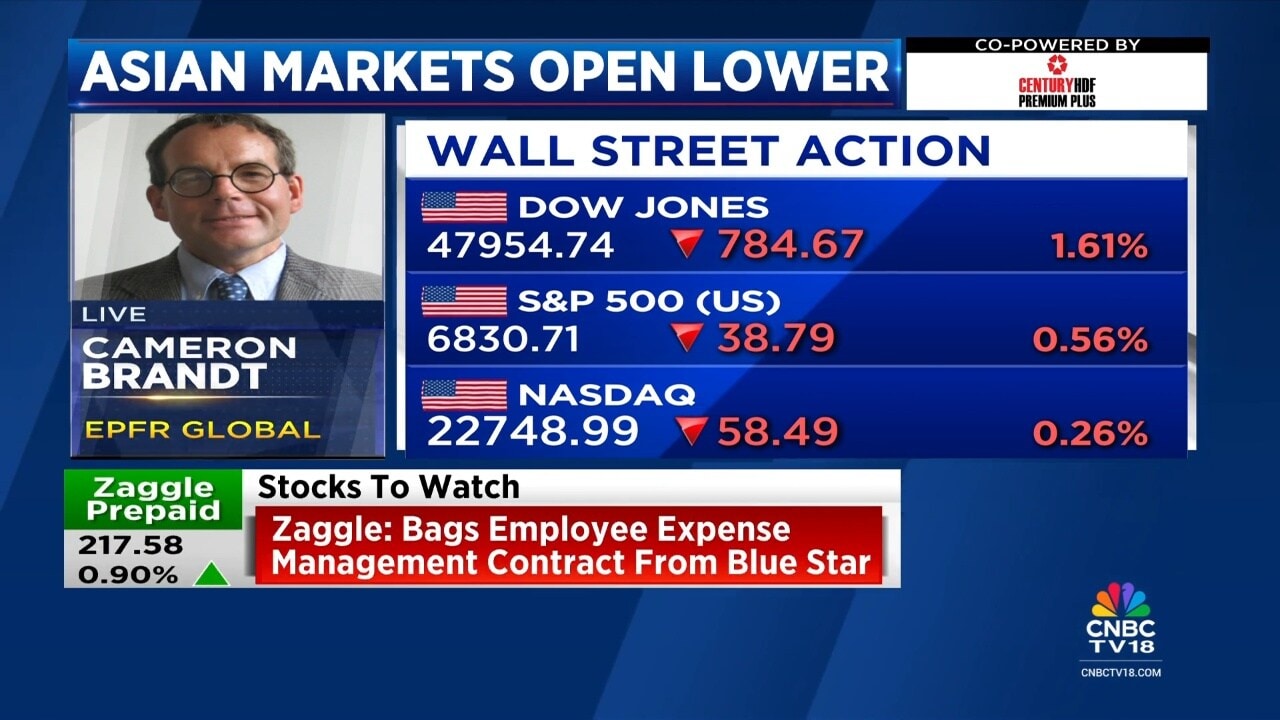
India equity funds see modest outflows as AI-linked markets attract investors: EPFR
Cameron Brandt, Director of Research at EPFR Global, said India equity funds saw modest outflows over the past week, while AI-linked markets such as Taiwan, China and Korea continued drawing investor interest. He added that geopolitical tensions have triggered only a muted risk-off response in global fund flows. US equity funds saw modest redemptions, while diversified emerging-market funds continued attracting money. Energy, defence and aerospace funds recorded strong inflows.

Sensex Today | Stock Market Highlights: Stock markets rebound tracking rally in global peers; Sensex rallies 899 points
Sensex Today | Stock Market Highlights: Benchmark stock indices Sensex and Nifty bounced back on Thursday (March 5), closing higher by more than 1 per cent in line with a rebound in global equities after recent sharp losses due to the conflict in West Asia.
Indices slide sharply amid Iran war jitters and crude price spike
The domestic equity benchmarks ended sharply lower on Wednesday as investors turned risk-averse amid escalating geopolitical tensions and a sharp surge in crude oil prices. The ongoing conflict involving the United States, Israel and Iran unsettled global markets, while the reported closure of the Strait of Hormuz pushed oil prices higher, raising concerns over inflation and energy costs. Sentiment was further dented by heavy selling from foreign institutional investors and the rupee slipping to a record low. Against this backdrop, the Nifty closed below the 24,500 mark. Barring the Nifty IT index, all other sectoral indices on the NSE ended in the red, with metal, PSU bank and oil & gas stocks leading the decline.
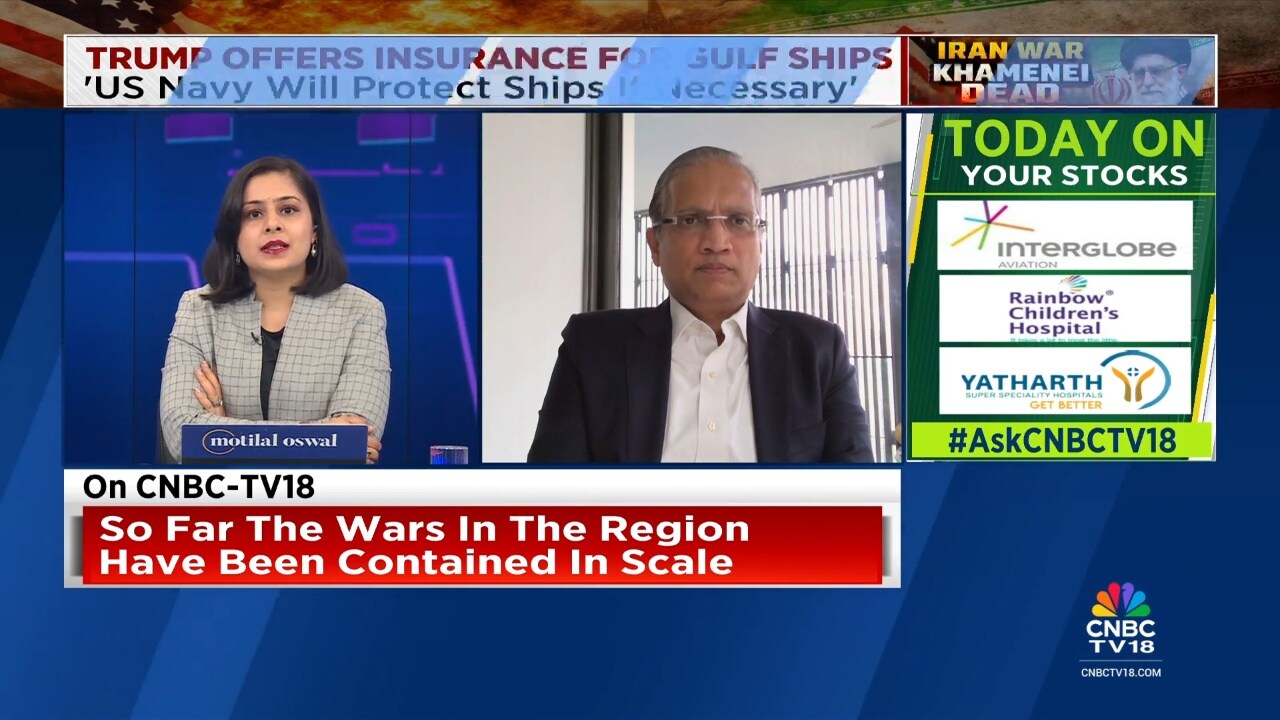
Market Outlook | Prashant Khemka sees low double-digit earnings growth for India in FY27
WhiteOak Capital’s Founder Prashant Khemka says markets typically recover once geopolitical tensions stabilise, though near-term movements will depend on how the conflict evolves. He cautions against predicting the extent of any correction and says WhiteOak remains fully invested despite tail risks. Khemka adds India is not uniquely vulnerable to oil disruptions as crude is a global commodity. He expects defence spending to rise globally and continues to see low double-digit earnings growth for India in FY27.

Stock Market Crash: Rs 10 lakh crore wiped out as Sensex plunges 1,122 pts, Nifty closes below 24,500; 4 factors behind today’s bloodbath
Stock Market Crash: Indian equity markets experienced a sharp downturn, with the Sensex and Nifty plummeting around 2% due to escalating Middle East conflict involving the US and Iran. Surging crude oil prices, heavy FII selling, and global headwinds contributed to the significant erosion of investor wealth.

Watch | Iran conflict unlikely to be prolonged; market flows remain stable, says Samir Arora
Helios Capital Founder Samir Arora said the ongoing Iran-related conflict is unlikely to turn into a prolonged war due to limited military capacity and rapid counter-responses from the US and Israel. He added that geopolitical tensions are not materially affecting market flows, noting that his offshore fund has received inflows of nearly ₹500 crore, which the firm plans to deploy immediately despite global uncertainty.

Watch | Sanjay Parekh on where he sees value in banks, IT, cement and telecom stocks
Sohum Asset Managers’ Founder & CIO, Sanjay Parekh, says markets look sluggish despite improving macro conditions, with Q3 Nifty earnings near 8–9%. He sees recovery in CVs (Ashok Leyland), credit growth at ICICI Bank and gradual picka a up in cement and steel. Portfolio stays domestic-focused: overweight telecom, NBFCs, industrials, cement, utilities, ports and logistics; underweight oil & gas and banks, zero FMCG. Watching IT names like Infosys and TCS, mid-cap tech (Persistent, Coforge, Mastek), defence HAL, quick commerce Zomato and Swiggy, and capital goods L&T, JSW Energy.
Vishal Mega Mart promoter Samayat Services sells 14% stake for Rs 7,635 crore
Singapore government, MAS and HDFC Mutual Fund pick up over 6% stake in bulk deals at Rs 117 per share.

Market overreacting to AI disruption; opportunities will expand with new technology: Ramesh Damani
Indian equity markets may be grappling with fresh volatility amid intensifying concerns around artificial intelligence, but seasoned investors believe the reaction has been overdone and that India’s long-term growth story remains firmly intact.Speaking in a panel discussion at News18’s Rising Bharat Summit, veteran market participant Ramesh Damani said recent market moves reflect anxiety over how AI could disrupt existing technology business models, rather than any deterioration in underlying economic fundamentals. Drawing parallels with earlier phases of technological change, Damani argued that innovation has historically expanded market opportunity rather than destroyed it.Echoing that view, Madhusudan Kela said AI-led disruption is real but should not be viewed as an existential threat to India’s growth trajectory. “Technology has never made societies poorer,” Kela said, while acknowledging that rapid change will inevitably create both winners and losers, even within the IT sector.Kela cautioned that short-term disruptions, particularly around employment and reskilling, cannot be ignored given the speed at which AI is evolving. However, he remained optimistic over the medium to long term, highlighting India’s skilled workforce and its potential to emerge as a global provider of AI solutions.Meanwhile, Vijay Kedia described the rise of highly valued global AI firms as a clear wake-up call for India, but not a reason for panic. He said companies can no longer afford to ignore AI, even as indiscriminate investment carries risks. “If you are not investing in AI, chances are you will lose your company. If you blindly invest in AI, chances are you will lose your capital,” Kedia said.