Market News
Stay updated with the latest market trends, earnings, and economic indicators.
INR appreciates near three-week high as oil retreats on ceasefire talks
The Indian rupee appreciated 53 paise to close at 95.05 (provisional) against the US dollar in early trade on Friday, as renewed optimism over the peace deal between the US and Iran boosted market sentiments. The domestic currency gained momentum near a three week high on an overnight decline in crude oil prices and a fall in the US dollar, after the US and Iran reached an understanding to extend the ceasefire for another 60 days although Trumps approval on the same is awaited. On Thursday, the US and Iranian negotiators reached a tentative agreement to extend the ceasefire by 60 days and start a new round of talks on Iran's nuclear programme. Meanwhile, BSE Sensex closed about 1.4% down at 74,775.7 on Friday, extending losses for a third session, restricting upside in the counter as investors remained cautious amid ongoing FII outflows, persistent geopolitical uncertainty and weaker-than-normal monsoon forecasts that could impact inflation.
NZ dollar climbs as RBNZ indicates need to increase OCR sooner and by more than envisaged
The New Zealand dollar firmed up on Wednesday after the central bank left OCR rates unchanged and signaled possibility of further rate hikes in futures. The OCR will most likely need to increase sooner and by more than envisaged in the February Monetary Policy Statement, RBNZ said in the statement. The pace of OCR increases will depend on the relative influence of persistent wage- and price-setting behaviour versus weaker economic activity on medium-term inflation pressures, it further noted. The Committee remains focused on ensuring that increased costs do not lead to elevated inflation over the medium term, while avoiding unnecessary economic volatility. The central bank also noted that New Zealands trading partners are expected to see weaker growth and higher inflation as global economic backdrop remains uncertain. Reserve Bank of New Zealand kept its official cash rate unchanged at 2.25% as expected. New Zealand dollar climbed 0.70% to around $0.587 this morning.

Top Gainers & losers on May 22: JSW Cement, Honasa Consumer, Tata Comm, Sammaan Capital, Trent among top gainers
On May 22, markets showed mixed results with the Nifty 50 gaining 0.40% and Sensex rising 0.36%. While Nifty Private Bank and Nifty Metal saw gains, Nifty Media and Nifty Pharma lagged. The Indian rupee strengthened to 95.9 per dollar amid RBI interventions.
INR rebounds well from historic lows as oil retreats from elevated levels; geopolitical risk and oil price sensitivity to cap upside
The Indian rupee rebounded 49 paise from its all-time closing low to settle at 96.37 against the US dollar on Thursday after crude oil prices retreated from elevated levels amid signs of easing geopolitical friction, alongside likely central bank intervention. Rupee had gained after the recent geopolitical developments, but investors are still gauging the geopolitical risk and oil price sensitivity in the background. The one-year forward market rate for the rupee touched the crucial 100/USD mark on Wednesday, indicating that currency markets are pricing in a weakening bias for the USD/INR pair over the next 12 months. Meanwhile, The Nifty 50 settled at 23,654.70 (down 4.30 points or 0.02%), while the BSE Sensex closed at 75,183.36 (down 135.03 points or 0.18%). The dollar index rose above 99.2 on Thursday, approaching again April-highs, as markets continued to track developments in the Middle East.
INR recovers from historic lows as oil pulls back; RBI announces $5 billion US Dollar/INR swap auction to defend rupee
The Indian rupee recovered well in opening trades on Thursday as global investors noted a slight pullback in crude oil prices over the recent comments on a potential final stage of the US-Iran conflict. INR opened at Rs 96.25 per dollar and hit a high of 96.05 so far during the day. Yesterday, the counter ended near the next critical level of 96.86, a new historic low. Meanwhile, in a major structural intervention to stabilise domestic financial markets, the Reserve Bank of India (RBI) has announced a $5 billion USD/INR buy-sell swap auction. Scheduled to take place next week on Tuesday, May 26, the central banks move is specifically engineered to inject durable, long-term Rupee liquidity into the commercial banking system. The Indian Rupee has faced persistent downward pressure, depreciating significantly against the American greenback in recent weeks due to ongoing global macroeconomic uncertainties and shifting foreign capital flows. By deploying this specialised monetary tool, ...
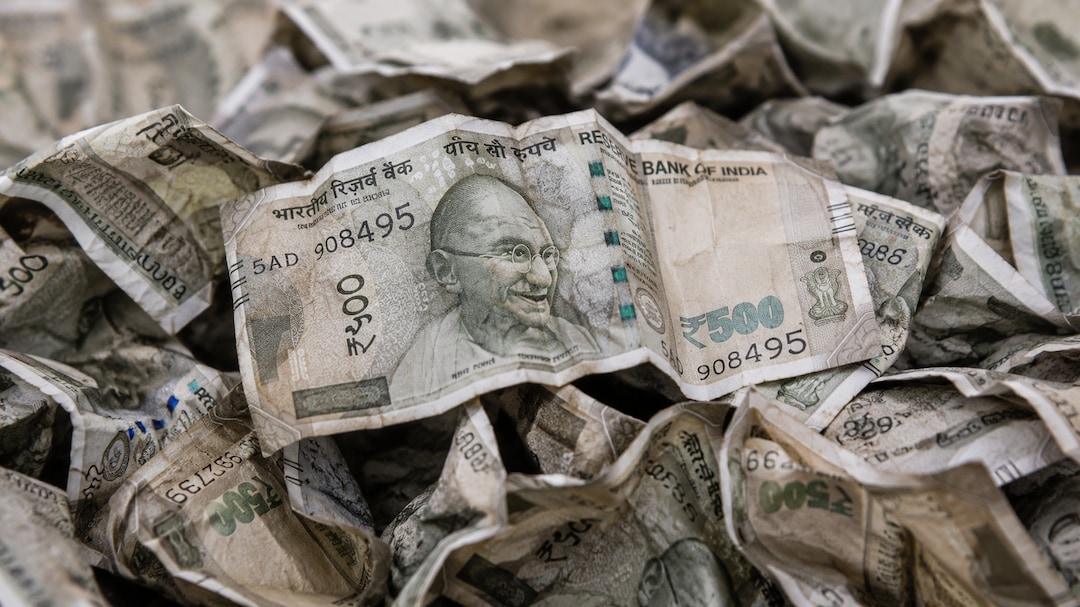
Rupee's Regional Rout: India Unit Trails 10% Against Pakistan, Bangladesh Currencies
The historic decline has been triggered by a combination of elevated crude, firm US yields and persistent dollar demand.
INR edges closer to a critical 97/$ threshold
The Indian rupee is seen in deep distress as the counter is moving towards breaking yet another key historic mark in opening trades on Wednesday. INR opened at Rs 96.89 per dollar and hit a low of 96.95 so far during the day. Yesterday, rupee slipped to a record low of 96.60 against the US dollar before settling at 96.52, weighed down by soaring crude oil prices, persistent foreign capital outflows, and a resilient dollar buoyed by global risk-aversion. The rupee is turning to be Asia's worst-performing currency in 2026. The currency has depreciated 1.5 per cent this month and more than 7 per cent so far this year. Rupee remains vulnerable to rising crude oil prices and the closure of the Strait of Hormuz. Meanwhile, the Indian equity benchmarks surrendered their early morning gains in a highly volatile trading session to settle marginally lower due to late profit-booking. The BSE Sensex declined 114.19 points (0.15%) to close at 75,200.85, while the NSE Nifty 50 slipped 31.95 points
Rupee falls to all-time low of 96.91 against dollar on oil, US rate concerns
Indian rupee hits record low against US dollar, pressured by rising US Treasury yields, high crude oil prices and Iran conflict driven geopolitical tensions.

IT stocks gain for 3rd day on rupee fall, tempered AI view
Indian IT stocks surged for a third consecutive session, driven by a weakening rupee that boosted margins for dollar-earning software exporters. Despite ongoing AI disruption concerns, positive sentiment emerged from AI implementation roles for IT firms and attractive valuations, signaling a potential turnaround for the sector.
INR collapses to new historic lows driven by global conflicts and energy spikes
The Indian rupee slipped to a record low of 96.60 against the US dollar before settling at 96.52 (provisional) on Tuesday, weighed down by soaring crude oil prices, persistent foreign capital outflows, and a resilient dollar buoyed by global risk-aversion. The rupee is Asia's worst-performing currency in 2026, having tumbled to a historic intraday low of 96.60 against the US dollar. The currency has depreciated 1.5 per cent this month and more than 7 per cent so far this year. Rupee remains vulnerable to rising crude oil prices and the closure of the Strait of Hormuz. Meanwhile, the Indian equity benchmarks surrendered their early morning gains in a highly volatile trading session to settle marginally lower due to late profit-booking. The BSE Sensex declined 114.19 points (0.15%) to close at 75,200.85, while the NSE Nifty 50 slipped 31.95 points (0.14%) to finish at 23,618.00.

Rupee at all-time low: How a weak currency could impact your wallet
Indian rupee hits record lows against US dollar as crude oil tops 100, raising import costs, threatening higher prices for fuel, travel and goods, while exporters and remittance earners gain

IT stocks led by Coforge, Persistent gain up to 12% in two sessions; Here's why they are in news
Weakness in the currency provides a margin tailwind to these IT companies, who get most of their revenue from the North American Market in the US Dollar and other currencies, whereas most of their fixed costs are in the local currency.