Market News
Stay updated with the latest market trends, earnings, and economic indicators.

RBI should avoid aggressive rate hikes as high crude threatens growth, says Axis AMC’s Devang Shah
Devang Shah, Head of Fixed Income at Axis AMC believes sharply tighter financial conditions could hurt growth and worsen economic stress. He expects the central bank to adopt a calibrated approach through gradual rate hikes and measures to attract dollar inflows, while warning that prolonged crude prices above $100 could continue to pressure India’s macroeconomic outlook and the rupee.
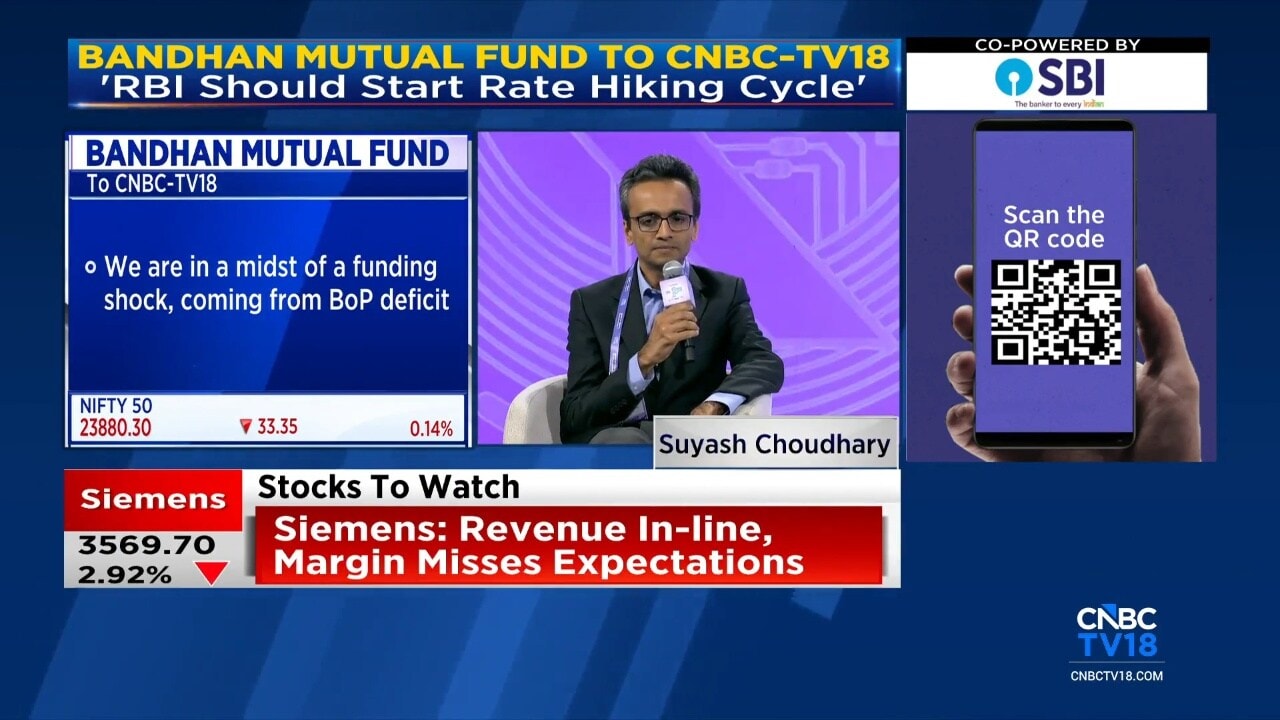
RBI should start rate hike cycle as inflation risks rise, says Bandhan MF’s Suyash Choudhary
Average inflation forecasts are likely to move higher, and the RBI should begin the rate hike cycle to maintain its credibility as an inflation-focused central bank, according to Suyash Choudhary, CIO-Fixed Income at Bandhan Mutual Fund. However, he believes rate hikes alone may not immediately solve the problem. He said the RBI must avoid mixed messaging to prevent market uncertainty and added that a favourable mix of global factors — including lower oil prices, better foreign inflows, and a weaker dollar — could help improve the situation.

Diamonds in the dust? Retail investors unleash Rs 17,500 crore on 8 battered bluechip stocks
Retail investors pumped an estimated Rs 17,539 crore into eight battered Nifty bluechip stocks during the March 2026 quarter, betting aggressively on market leaders despite steep declines in portfolio values. HDFC Bank, ITC, Wipro, Infosys, TCS, Reliance Industries and L&T emerged as top retail picks even as their shares fell sharply.
INR rebounds under Rs 96/$ mark tracking positive cues from local equities
The Indian rupee rose for the second consecutive session on Friday to close at 95.73 (provisional) against the US dollar on softening of crude oil prices and supposed intervention by the Reserve Bank. Markets found some comfort after comments from US Secretary of State Marco Rubio hinted that diplomatic talks linked to the Iran situation were moving in a constructive direction. Moreover, positive domestic equities and a decline in US treasury yields also supported the rupee. Indian shares ended modestly higher on Friday, giving up some early gains amid renewed optimism about U.S.-Iran talks. The NIFTY 50 and BSE Sensex settled higher, with the Sensex up 231.99 points (0.31%) to end at 75,415.35 and the NIFTY adding 64.60 points (0.27%) to close at 23,719.30.

Top Gainers & losers on May 22: JSW Cement, Honasa Consumer, Tata Comm, Sammaan Capital, Trent among top gainers
On May 22, markets showed mixed results with the Nifty 50 gaining 0.40% and Sensex rising 0.36%. While Nifty Private Bank and Nifty Metal saw gains, Nifty Media and Nifty Pharma lagged. The Indian rupee strengthened to 95.9 per dollar amid RBI interventions.
INR rebounds well from historic lows as oil retreats from elevated levels; geopolitical risk and oil price sensitivity to cap upside
The Indian rupee rebounded 49 paise from its all-time closing low to settle at 96.37 against the US dollar on Thursday after crude oil prices retreated from elevated levels amid signs of easing geopolitical friction, alongside likely central bank intervention. Rupee had gained after the recent geopolitical developments, but investors are still gauging the geopolitical risk and oil price sensitivity in the background. The one-year forward market rate for the rupee touched the crucial 100/USD mark on Wednesday, indicating that currency markets are pricing in a weakening bias for the USD/INR pair over the next 12 months. Meanwhile, The Nifty 50 settled at 23,654.70 (down 4.30 points or 0.02%), while the BSE Sensex closed at 75,183.36 (down 135.03 points or 0.18%). The dollar index rose above 99.2 on Thursday, approaching again April-highs, as markets continued to track developments in the Middle East.

Stocks to buy: Sagar Doshi suggests Varun Beverages, Max Healthcare, Page Industries shares to buy
The Indian stock market saw a marginal rise amid optimism over a potential nuclear deal with Iran. Nifty 50 advanced 0.11%, and the BSE Sensex increased by 0.17%. Despite this, Bank Nifty fell nearly 200 points, while analysts suggested specific stocks to buy.

Retail SIP boom boosts AMC outlook; Nippon, ICICI Pru lead pack: Siddhartha Khemka
India's asset management sector is transforming with systematic investing driving growth and stability, reducing reliance on volatile discretionary capital. SIP inflows have surged, now forming a significant portion of mutual fund assets, indicating a shift towards predictable, annuity-like revenue streams. This structural change positions the industry for sustained, retail-led expansion.

Nifty Bank falls 500 points as PNB, Canara Bank, SBI, other stocks decline up to 3%. What lies ahead?
Indian bank stocks tumbled, dragging the Nifty Bank index down as a weakening rupee and rising global bond yields soured market sentiment. Several major banks saw significant declines, with analysts pointing to key technical levels. The rupee hit an all-time low against the dollar, exacerbating concerns for the financial sector.

BSE wants more participation and products, not just a bigger market share, says CEO
Sundararaman Ramamurthy believes India’s mutual fund penetration remains low relative to the country’s population, leaving significant room for growth as financial awareness and retail participation continue to rise.

Individual investors sold Rs 13,000 crore worth stocks, but Zerodha clients kept buying: Nithin Kamath
Retail investors sold equities, but Zerodha clients bought heavily, highlighting divergence. Overall, direct retail ownership declined while mutual fund holdings hit record highs, reflecting a structural shift toward professionally managed investments and rising domestic institutional dominance in Indian equity markets

Retail direct equity bets fall, MF holdings rise to new high
Individual investors reduced direct equity ownership for the third consecutive quarter, while mutual fund holdings reached a record high, driven by surging retail inflows. Foreign ownership hit a 14-year low amid a risk-off sentiment, contrasting with domestic institutional holdings climbing to an all-time peak.