Market News
Stay updated with the latest market trends, earnings, and economic indicators.
INR settles around record low level as energy crisis deepen
The Indian rupee weakened further and fell to a record low of 95.73 (provisional) against the US dollar on Thursday, amid a strong dollar and worries over inflation amid elevated energy prices. International oil prices continued to hold around $100 per barrel mark that kept rupee under pressure. The rupee is expected to trade with a negative bias amid inflation concerns and the strength of the US dollar in the overseas market. The West Asia crisis and the blockade of the Strait of Hormuz have disrupted crude petroleum imports into India. Investors also awaited the outcome of U.S. President Donald Trump's summit with Chinese President Xi Jinping in Beijing. However, positive local equities limited losses in the domestic unit to some extent. Indian equity markets settled sharply higher for the second consecutive session, with the Sensex rising 789.74 points (1.06%) to 75,398.72 and the Nifty gaining 277 points (1.18%) to 23,689.60.
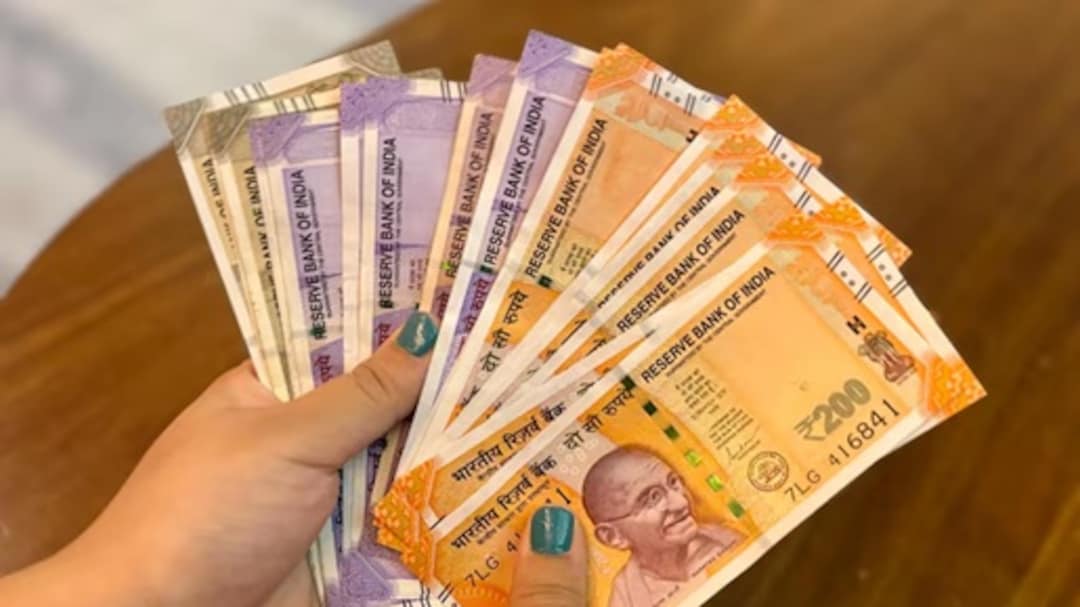
Rupee Hits New Record Low Of Rs 95.83 Against US Dollar Amid Trump-Xi Meet, US-Iran Volatility
Rupee opened at Rs 95.72against the US dollar, marginally weaker from its previous close.
Benchmarks snap 4-day losing streak; Nifty settles above 23,400
Domestic equity benchmarks Sensex and Nifty snapped a four-session losing streak to close higher on Wednesday, aided by value buying in beaten-down stocks. Market recovered from early volatility and profit booking to rebound sharply from intraday lows, with the Nifty settling above the 23,400 mark. Gains were led by metal, consumer durable and energy shares, while IT and auto stocks remained under pressure. However, overall sentiment stayed cautious amid elevated crude oil prices, persistent foreign institutional investor outflows, rupee weakness and lingering global inflation concerns. The Indian rupee also touched a fresh intraday record low of 95.80 against the US dollar.
INR seen mildly supported as govt raises gold tariff
The Indian rupee is seen recovering some of its lost momentum from record low levels in opening trades on Tuesday after the govt stepped in to stabilize the local unit. The govt has raised import tariffs on gold and silver to 15%, reversing the 2024 duty cuts, as the government moves to curb surging precious metal imports, narrow trade deficit and support the rupee amid mounting external pressures. INR opened at Rs 95.52 per dollar and rebounded to a high of 95.51 so far during the day. Yesterday the counter closed at 95.68. Indian shares are seen opening little changed on Wednesday after two consecutive heavy sell-off sessions. Yesterday, Indian equity markets experienced a sharp decline, with the Sensex settling 1,456.04 points (1.92%) lower at 74,559.24 and the Nifty 50 falling 436.30 points (1.83%) to close at 23,379.55.
INR closes at all-time low as global risk aversion resurfaces
The Indian rupee depreciated 35 paise to close at an all-time low of 95.63 (provisional) against the US dollar on Tuesday, as renewed tension between the US and Iran has led to risk aversion in global markets. Market sentiment remained dominated by fears that the 10-week-old conflict could further tighten global supply, particularly after President Donald Trump rejected Tehran's latest response to a US-backed peace proposal, calling it totally unacceptable. Moreover, market participants interpreted Prime Minister Narendra Modi's comments over the weekend regarding fuel conservation and lower imports as a subtle acknowledgement that India's trade deficit and balance-of-payments pressures could worsen if crude prices remain elevated for longer. The Sensex tumbled 1,456.04 points (1.92%) to settle at 74,559.24, while the Nifty 50 dropped 436.30 points (1.83%) to end at 23,379.55.

BSE wants more participation and products, not just a bigger market share, says CEO
Sundararaman Ramamurthy believes India’s mutual fund penetration remains low relative to the country’s population, leaving significant room for growth as financial awareness and retail participation continue to rise.

Taiwan’s $286 billion pension fund trims its US dollar exposure as volatility rises
Taiwan Bureau of Labour Funds trims US dollar asset exposure amid global de-dollarization concerns, while still seeing dollar strength, and pushes managers to deepen presence in Taiwan

Taiwan’s $286 Billion Pension Fund Trims Its Dollar Exposure
Taiwan’s largest pension fund has reduced some of its US currency exposure amid heightened market volatility and a broader global reassessment of dollar assets.

Individual investors sold Rs 13,000 crore worth stocks, but Zerodha clients kept buying: Nithin Kamath
Retail investors sold equities, but Zerodha clients bought heavily, highlighting divergence. Overall, direct retail ownership declined while mutual fund holdings hit record highs, reflecting a structural shift toward professionally managed investments and rising domestic institutional dominance in Indian equity markets
Sensex slips 252 pts, Nifty below 24,050 amid currency weakness and expiry volatility
The key equity benchmarks closed with measured losses on Tuesday, as a sharp slide in the rupee to a record low against the US dollar rattled sentiment, while the weekly expiry of Nifty derivatives injected fresh volatility into the market. Escalating US-Iran tensions further bruised investor confidence, wiping out recent optimism sparked by state election results and echoing weakness across global markets. Ongoing quarterly earnings announcements kept traders on edge, prompting a cautious stance. The Nifty slipped below the 24,050 mark, weighed down by private banks and consumer durables stocks, while FMCG, auto and pharma shares defied the broader weakness and ended in the green.
No systemic risk to BFSI sector; may see short-term slowdown in loan growth: Deepak Parekh
Industry veteran Deepak Parekh stated the banking and financial services sector is not facing major systemic risks from global geopolitical uncertainties. He anticipates a short-term slowdown in loan growth. Real estate investment trusts are growing in India. Insurance penetration remains low. Deposit mobilization has moderated as retail investors favor mutual funds. Artificial intelligence's impact on finance is still evolving.

Retail investors, HNIs shifting from holding direct stocks to mutual funds. Here’s why
Individual investors in India are increasingly shifting from direct stock holdings to mutual funds, with direct ownership hitting a five-year low and MF holdings reaching record highs. Strong SIP inflows and declining FII participation are driving domestic institutions to become key market stabilisers, signalling a structural shift in investor behaviour.