Market News
Stay updated with the latest market trends, earnings, and economic indicators.

$100 crude gives Rs 20 lakh crore shock to Nifty bulls this week. Best time to buy the fear?
Crude oil above $100 has wiped out Rs 20 lakh crore in equity wealth, hammering markets in India as the Iran conflict escalates. The rupee hit a record low, and FIIs continue to sell, yet experts and Axis Mutual Fund argue the panic may be creating a rare long-term buying window.
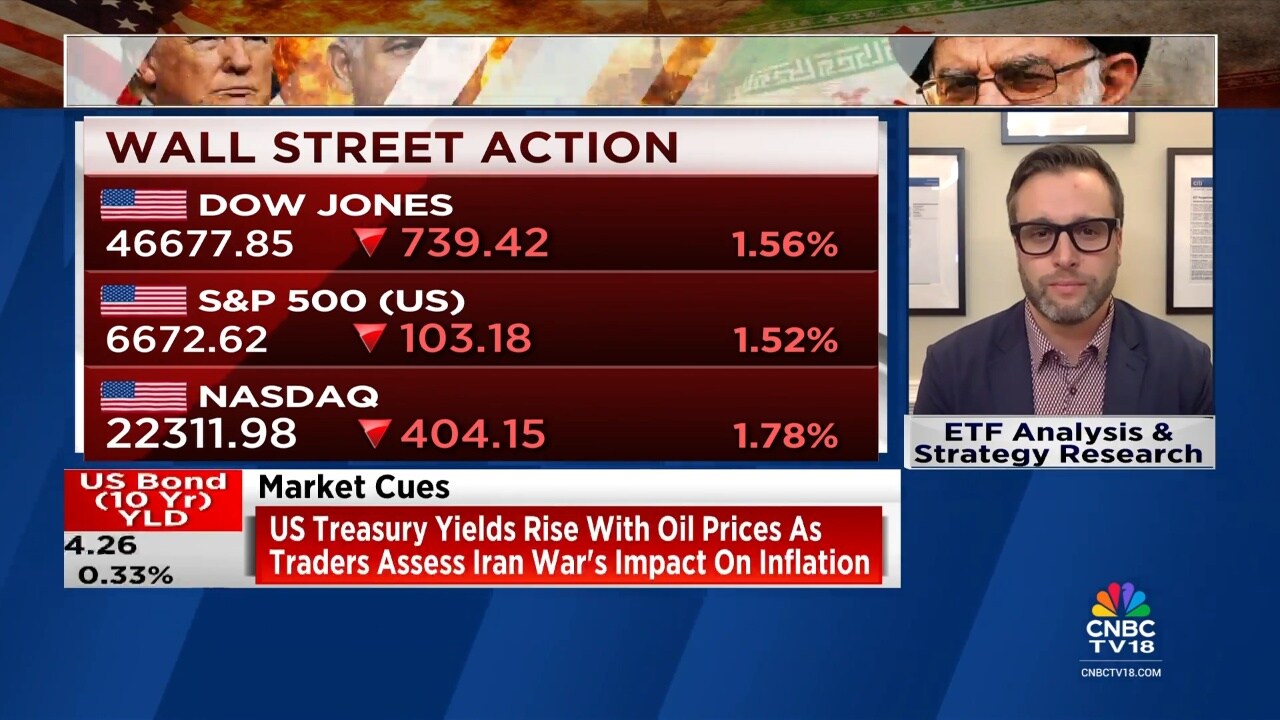
Fed may still cut rates if labour market weakens despite oil shock: Citi
Drew Pettit, Director-US Equity Strategy, ETF Analysis & Strategy Research at Citi, says the bullish case for US equities remains intact as secular growth trends continue to support earnings, with Citi’s street-high $320 EPS estimate possibly conservative. However, sustained high interest rates and elevated oil prices could challenge valuations. Citi believes the Fed may still cut rates if labour markets weaken. In a bear scenario, earnings could fall to $300. He adds India remains neutral amid valuation concerns.
INR recovers from record lows but settles beyond 92/$ mark
The Indian rupee recovered from record low levels and settled with a loss of 16 paise at 92.17 (provisional) against the US dollar on Thursday as global crude oil prices stayed on an upward trajectory amid the raging war in West Asia. A stronger greenback and volatility in the domestic equity markets further weighed on the rupee, which was already on a weak footing in early trade due to heavy foreign fund outflows. Indian shares fell sharply on Thursday to extend losses from the previous session as the prospect of a quick end to the war in West Asia thinned and trade tensions resurfaced. At close, the Sensex declined 829.29 points, or 1.08 per cent, to settle at 76,034.42, taking its two-day decline to 2,171.56 points. While the Nifty slipped 227.70 points, or 0.95 per cent, to close at 23,639.15, it slipped 2.56% in two sessions. At the interbank foreign exchange, the local unit opened at 92.25 but kept slipping to touch its record intra-day low against the greenback at 92.36. ...

Ahead of Market: 10 things that will decide stock market action on Thursday
Indian stock markets, Sensex and Nifty, experienced a significant downturn on Wednesday. Both indices closed nearly 2% lower. This decline followed a surge in crude oil prices and heightened tensions in West Asia. Foreign fund outflows and selling in major bank stocks also contributed to the market's fall. Investors are now awaiting key inflation data from the US and India.
Kedaara Capital gears up to sell Universal NutriScience for Rs 3,000 crore
UNS markets Seacod, one of India's top-selling cod liver oil capsule brands. The company is expected to be valued at around ₹3,000 crore. Investment bank Rothschild has been appointed to advise Kedaara on the sale process, the people cited above said.

DSP Mutual Fund flags global shifts, expensive midcaps, IT lag: How investors may position portfolios
DSP Mutual Fund advises caution and diversification amid market risks like rising oil prices and high US equity valuations. AI spending by tech giants drives global markets.
INR crashes to fresh record low as oil surges past $100 mark amid Middle East tensions
The Indian rupee crashed to its all-time closing low of 92.35 (provisional) against the US dollar on Monday, losing 53 paise during the session, as global crude oil prices saw a sharp spike, and the greenback strengthened amid worsening conflict in the Middle East. Withdrawal of foreign funds amid intense selling in domestic equity markets further pressured the rupee. Indian shares slumped on Monday as the Iran-Israel-U.S. war entered its 10th day and the Strait of Hormuz, a critical trade route, remained shut for the sixth consecutive day. The benchmark BSE Sensex ended down 1,352.74 points, or 1.71 percent, at 77,566.16 after hitting a low of 76,424.55 earlier. The broader NSE Nifty index hit an intraday low of 23,697.80 before recovering some lost ground to close down 422.40 points, or 1.73 percent, at 24,028.05. At the interbank foreign exchange, the rupee opened at 92.22 and rose briefly to 92.15 but kept losing ground through the session before eventually settling at its ...

Bitcoin, ETH trade cautiously as oil spike, ETF flows roil crypto markets
The recent pullback comes after a sharp reversal in US spot Bitcoin ETF flows and growing concerns around inflation and geopolitical tensions

Markets in ‘fear phase’, deploy money in autos, banks, capital goods: AlfAccurate’s Rajesh Kothari
The sharp correction in Indian equities triggered by fears of a prolonged war in West Asia should be viewed as a buying opportunity, according to Rajesh Kothari, Managing Director at AlfAccurate Advisors.Benchmark indices declined nearly 3% this week — their steepest weekly fall in over a year — as rising crude oil prices and geopolitical tensions rattled investor sentiment. Financial stocks led the decline, with the Nifty Bank logging its biggest weekly drop in 14 months.However, Kothari believes the selloff reflects sentiment rather than a deterioration in underlying economic fundamentals.“We are currently in a fearful phase of the market. When others are fearful, that’s usually the time to be greedy,” Kothari told CNBC-TV18, advising investors to deploy money gradually over the next 30–60 days rather than attempting to time the market.He emphasised that the outcome of the West Asia conflict is less important for markets than its duration. While companies with exposure to the Middle East could face short-term uncertainty, the broader domestic growth story remains intact.Against this backdrop, Kothari highlighted four sectors that investors should focus on.Autos remain a key bet, supported by strong demand trends and low inventory levels across the industry. February sales data was robust, and leading automakers have reported healthy growth, signalling sustained momentum.Banking and financials are another preferred sector. Credit growth has improved to around 13% from about 8.5% earlier, while asset quality remains strong. According to Kothari, the sector could become a “strong buy on declines” if crude-driven inflation concerns ease.He also sees opportunities in capital goods, particularly companies reporting strong order inflows as India’s investment cycle picks up.Lastly, hospitals stand out as a defensive play. The sector remains largely insulated from geopolitical risks and technological disruptions such as artificial intelligence.“These are strong India stori
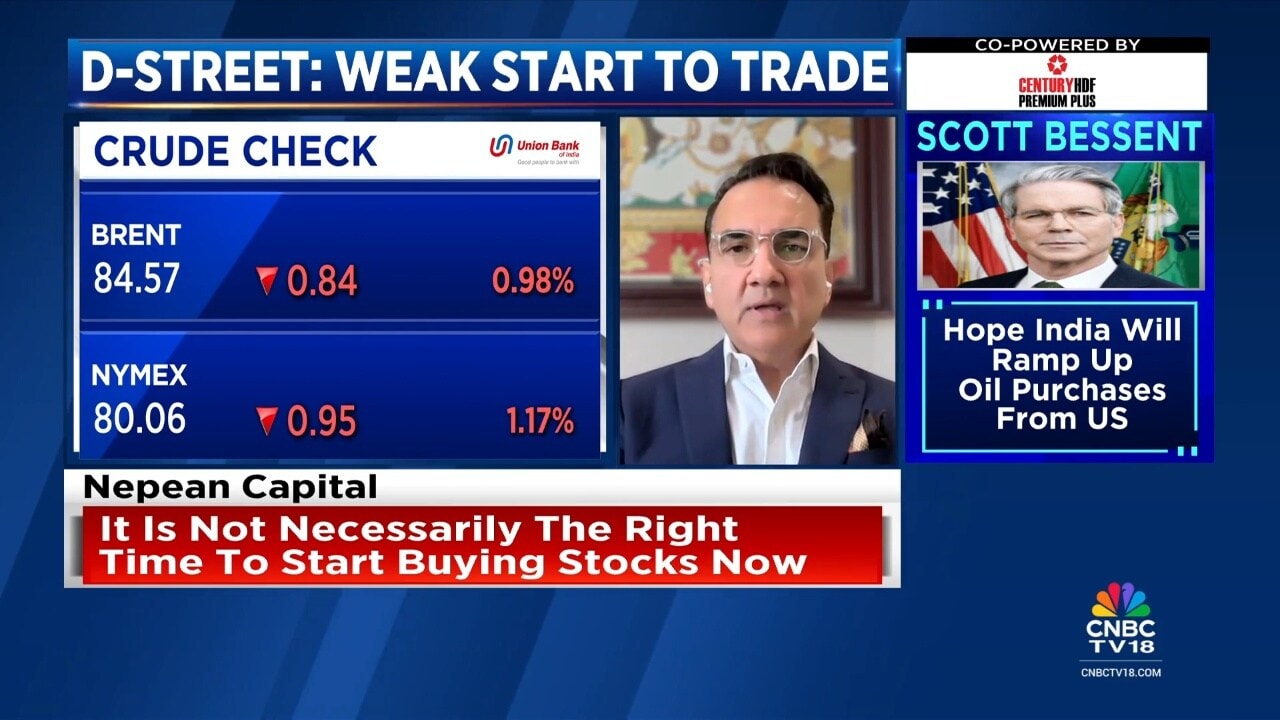
Why Napean's Gautam Trivedi is not rushing to buy the dip yet
Gautam Trivedi, Co-Founder of Nepean Capital, says Middle East tensions have disrupted improving sentiment for India despite recent FII inflows and positive economic developments. He notes emerging markets are seeing strong inflows, but India may lag due to higher oil prices and external risks. While many stocks have corrected, he advises caution on deploying fresh capital and prefers themes like data centres, co-working and select metals.
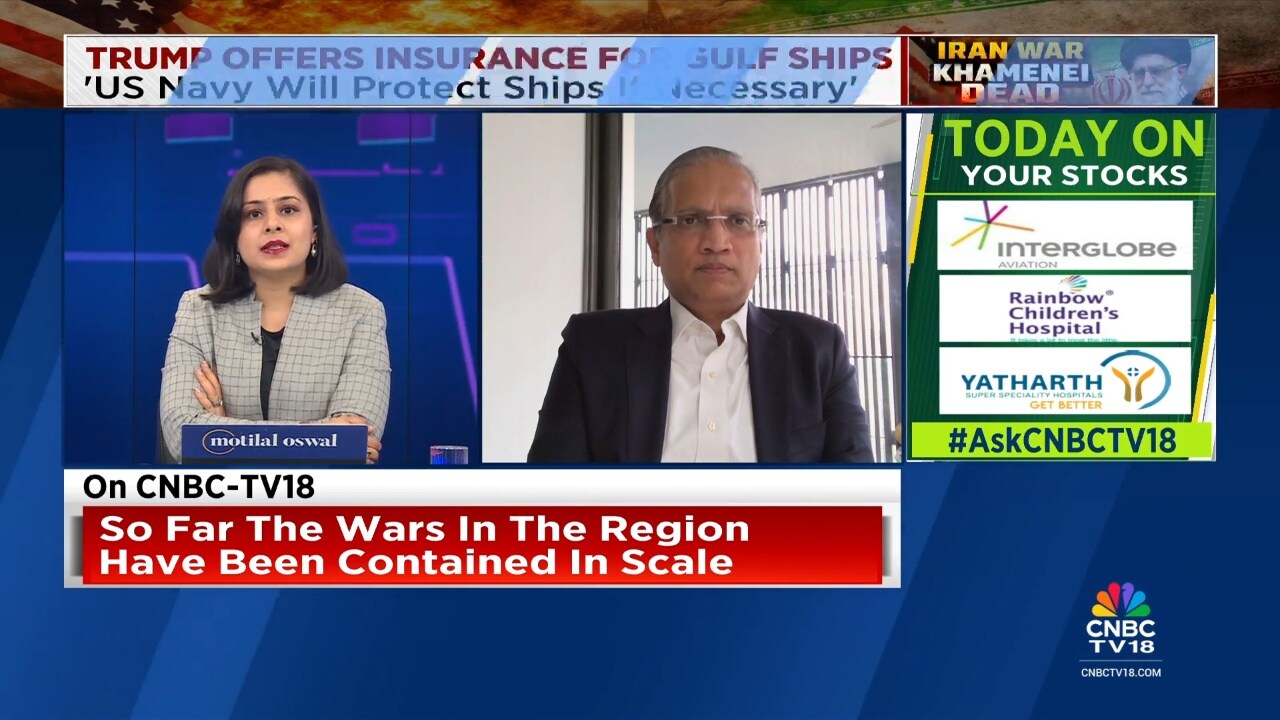
Market Outlook | Prashant Khemka sees low double-digit earnings growth for India in FY27
WhiteOak Capital’s Founder Prashant Khemka says markets typically recover once geopolitical tensions stabilise, though near-term movements will depend on how the conflict evolves. He cautions against predicting the extent of any correction and says WhiteOak remains fully invested despite tail risks. Khemka adds India is not uniquely vulnerable to oil disruptions as crude is a global commodity. He expects defence spending to rise globally and continues to see low double-digit earnings growth for India in FY27.

Vinay Rajani of HDFC Sec suggests HDFC Gold ETF, Oil India shares to buy in the near-term
The Indian stock market fell significantly on March 2, with the Sensex down 2,743 points and the Nifty 50 plummeting over 500 points due to geopolitical tensions and foreign capital withdrawals, resulting in a loss of ₹8 lakh crore in market capitalization.