Market News
Stay updated with the latest market trends, earnings, and economic indicators.

Vinay Rajani of HDFC Sec suggests HDFC Gold ETF, Oil India shares to buy in the near-term
The Indian stock market fell significantly on March 2, with the Sensex down 2,743 points and the Nifty 50 plummeting over 500 points due to geopolitical tensions and foreign capital withdrawals, resulting in a loss of ₹8 lakh crore in market capitalization.

Trade Setup for March 2: Nifty braces for Monday chaos after US, Israel attack Iran
Before the markets open here in India, the bigger reaction will be seen on other asset classes beyond equities. Crude oil prices, Gold prices, moves on the US Dollar, the Yen, all of which will be significant and keenly monitored by the street. In fact, Barclays has already written in a note to clients that oil prices could go up to as high as $100 per barrel.

Watch | Sanjay Parekh on where he sees value in banks, IT, cement and telecom stocks
Sohum Asset Managers’ Founder & CIO, Sanjay Parekh, says markets look sluggish despite improving macro conditions, with Q3 Nifty earnings near 8–9%. He sees recovery in CVs (Ashok Leyland), credit growth at ICICI Bank and gradual picka a up in cement and steel. Portfolio stays domestic-focused: overweight telecom, NBFCs, industrials, cement, utilities, ports and logistics; underweight oil & gas and banks, zero FMCG. Watching IT names like Infosys and TCS, mid-cap tech (Persistent, Coforge, Mastek), defence HAL, quick commerce Zomato and Swiggy, and capital goods L&T, JSW Energy.
India's core sector grows at 4% in Jan-26, Steel and Cement production surges
The combined Index of Eight Core Industries (ICI) increased by 4.0 per cent (provisional) in January, 2026 as compared to the Index in January, 2025. Growth has eased from a revised 4.7% in December. The production of Cement, Steel, Electricity, Fertilizer and Coal recorded positive growth in January, 2026. The Eight Core Industries comprise 40.27 percent of the weight of items included in the Index of Industrial Production (IIP). The final growth rate of Index of Eight Core Industries for December 2025 was observed at 4.7 per cent. The cumulative growth rate of ICI during April to January, 2025-26 is 2.8 per cent (provisional) as compared to the corresponding period of last year.
INR tumbles near three-week low amid surging international oil prices, firm dollar overseas
The Indian rupee plunged 31 paise to settle at 90.99 (provisional) against the US dollar on Friday, tracking a strong American currency against major currencies and higher crude oil prices amid intensifying US-Iran tensions. Positive momentum in domestic equity markets failed to support the Indian unit. Indian shares bounced back on Friday after falling sharply in the previous session on rising geopolitical tensions and uncertainty over the Federal Reserve's rate path. The benchmark BSE Sensex jumped 316.57 points, or 0.38 percent, to 82,814.71. The broader NSE Nifty index surged 116.90 points, or 0.46 percent, to 25,571.25, with metal and banking stocks leading the surge.

Rs 7.5 lakh crore selloff! US-Iran war fears among 5 key triggers behind Sensex's 1,400-point intraday crash
Indian stock markets, Nifty and Sensex, experienced a sharp selloff on Thursday, wiping out Rs 7.55 lakh crore in investor wealth. This decline was driven by geopolitical tensions involving the US and Iran, uncertainty surrounding US Federal Reserve rate cuts, rising crude oil prices, and increased bond yields, alongside profit booking by investors.
Indian stock market: 7 key things that changed for market overnight- Gift Nifty, US Fed minutes, oil prices to gold rate - Mint
Indian stock market: 7 key things that changed for market overnight- Gift Nifty, US Fed minutes, oil prices to gold rateMint

When oil prices fall and geopolitical risks recede: The sectors that truly win in India
Selective exposure to aviation, OMCs, paints, tyres, automobiles, logistics, and rate-sensitive financials offers a high-conviction way to participate in India’s ongoing structural growth story.
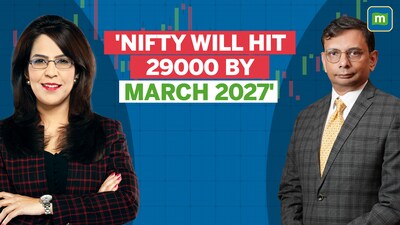
Nifty at 29,000 by March 2027? Emkay's Seshadri Sen Shares Top Stock Picks
Can the Nifty hit 29,000 by March 2027? In this conversation with Surabhi Upadhyay, Emkay Global's Head of Research & Strategist Seshadri Sen explains why falling oil prices, a stronger rupee, improving earnings growth and resilient domestic flows could drive a 20% rally in Indian equities. He also shares his favourite sectors, key risks to watch and top investment themes for the next two years.

LIVE: Can Nifty Extend Its Rally? Global Tensions, Oil & Fed in Focus | Opening Bell
Can the Nifty extend its recent rally or will fresh geopolitical tensions and global market weakness cap gains? In today's Opening Bell, we break down the key cues driving markets—from renewed US-Iran tensions, Brent crude hovering near $72, mixed Asian markets, and weak Wall Street sentiment to Fed rate expectations, rising gold prices, OpenAI's IPO delay, chip stock weakness, and FII-DII activity. Catch Lovisha Darad in conversation with Market experts on Opening Bell.
Bank Nifty falls over 2% as crude-driven inflation worries weigh; ICICI Bank, HDFC Bank among top Nifty losers
The weakness in banking stocks reflects macro concerns arising from surging crude oil prices amid the escalation of the Middle East conflict. Elevated crude oil prices have reignited inflationary concerns, stoking fears of tighter monetary policies and delay in interest-rate cuts by central banks.
Live: Brent Hits $95 After US-Iran Escalation | Gold Slides | Nifty Set for Cautious Open| Opening Bell
Wall Street heads into the opening bell under pressure after a sharp selloff on Wednesday, with all three major U.S. indexes falling more than 1%. Technology and semiconductor stocks remained weak, while escalating tensions in the Middle East added another layer of uncertainty for investors. The Dow Jones Industrial Average tumbled 953 points (-1.87%) to 49,918.78, the S&P 500 dropped 119.66 points (-1.62%) to 7,266.99, and the Nasdaq Composite slid 509.32 points (-1.98%) to 25,169.50. Investor sentiment remains cautious as markets assess the implications of fresh U.S. strikes on Iran and Iran's announcement of the closure of the Strait of Hormuz. The developments have pushed oil prices sharply higher, raising concerns that elevated energy costs could fuel inflation and keep interest rates higher for longer. The U.S. dollar traded cautiously as investors balanced geopolitical risks against the Federal Reserve's rate outlook. Meanwhile, gold extended its decline, hitting a more than six-month low as rising oil prices and inflation fears dampened expectations for near-term monetary easing. Markets are expected to remain highly sensitive to geopolitical headlines, energy price movements, and interest-rate expectations as trading gets underway.